
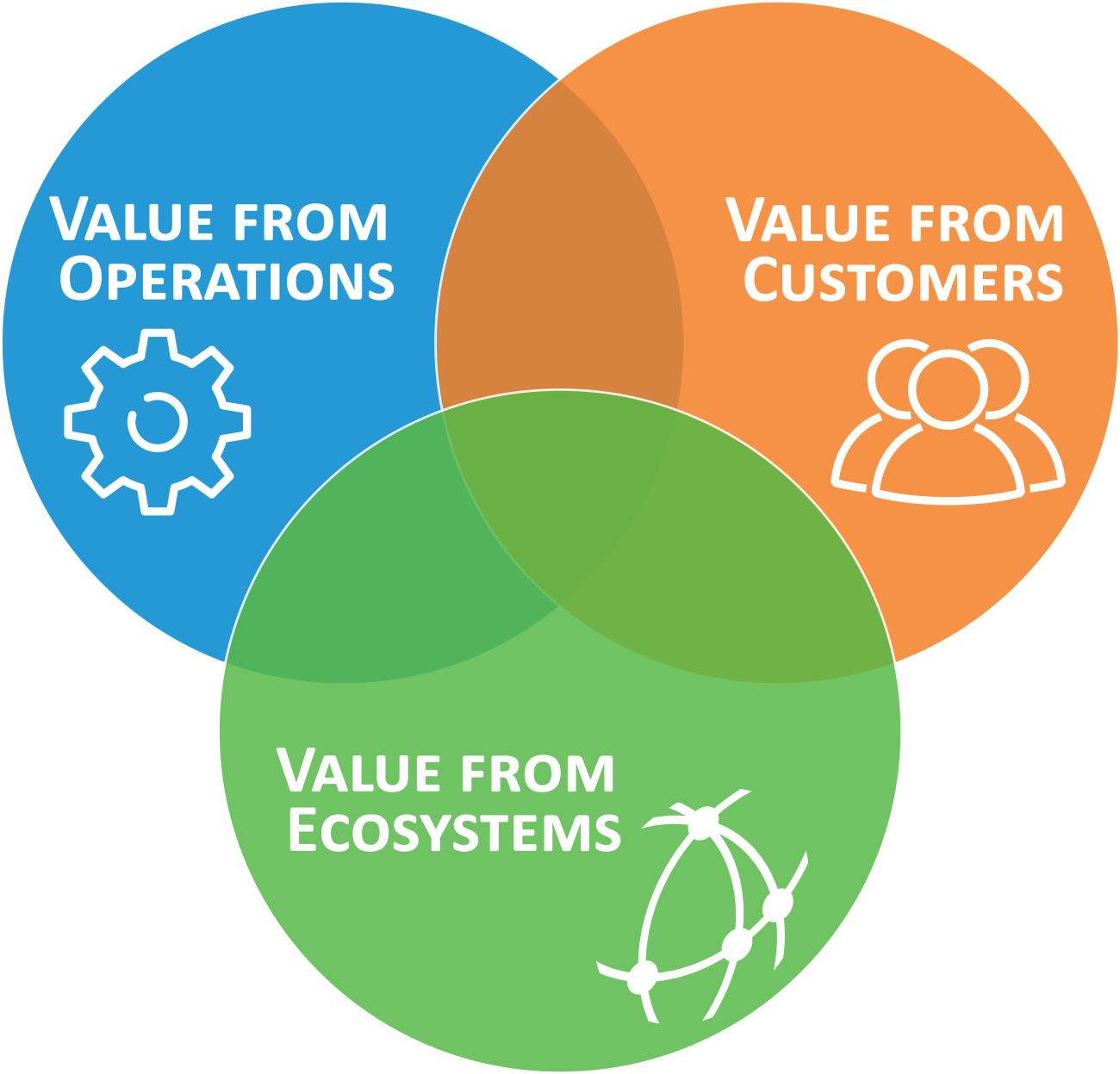
Three Types of Value Drive Performance in Digital Business | MIT CISR


Value-Generating Technology Services (often referred to as Technology Value Creation Services) are IT and consulting services designed to shift technology from an operational expense into a direct driver of business growth, revenue, and efficiency. Instead of treating IT as a reactive utility (e.g., fixing broken hardware), these services strategically align technology investments with broader business objectives to create measurable enterprise value. 
This framework is heavily utilized by executive leaders, enterprise transformations, and Private Equity firms looking to aggressively scale the valuation of their portfolio companies. 

💡 Core Pillars of Value-Generating Tech Services

Value-generating services typically focus on three distinct corporate levers: [4, 8]

  • Top-Line Growth: Deploying tech like AI, advanced data analytics, and modern e-commerce channels to reach new markets, personalize customer experiences, and unlock new revenue streams. [4, 5]
  • Bottom-Line Efficiency: Eliminating manual friction and legacy bottlenecks through automation, cloud migration, and workflow optimization to expand profit margins. [4, 5, 9, 10, 11]
  • Capital Efficiency: Re-architecting software ecosystems into "asset-light" or scalable models, optimizing software license portfolios, and resolving costly technical debt before corporate exits or sales. [4, 12, 13]

🛠️ Key Offerings Included in These Services

When organizations hire a Technology Value Creation Partner or a consultancy like Deloitte or PwC, the engagement spans several critical service offerings: [2, 3, 14, 15, 16]

1. Tech Due Diligence & Exit Readiness [17]


  • Assessing software architectures, scalability, and cybersecurity protocols during mergers and acquisitions.
  • Identifying operational risks and uncovering immediate post-close performance "playbooks". [5, 18]

2. AI & Digital Transformation


  • Embedding AI and automated machine workflows where they directly improve human decision-making and productivity.
  • Restructuring legacy applications into modern digital service platforms. [1, 3, 19, 20]

3. IT Spend Optimization & Governance [21]


  • Mapping traditional technical costs (like data centers and SaaS licenses) into transparent business outcomes.
  • Implementing strict delivery governance so every approved project returns incremental earned value. [18, 22]

4. Fractional & Special Operations Leadership


  • Providing interim or embedded technical leaders (such as Fractional CTOs or CMOs) to drive architecture and project clarity with urgency. [17]

📊 Traditional IT vs. Value-Generating IT

To understand the concept clearly, it helps to look at how the underlying mindset changes:
Metric / Focus [1, 2, 3, 5, 23] Traditional IT Services Value-Generating Tech Services
Primary Goal Maintain stability and minimize system downtime. Accelerate business growth, valuation, and ROI.
Financial View Viewed as a cost center or corporate expense. Viewed as an investment driver for revenue.
Data Strategy Storing and protecting basic corporate data. Monetizing data via analytics for predictive insights.
Relationship Reactive vendor fulfilling specific tickets. Proactive partner embedded in the business ecosystem.