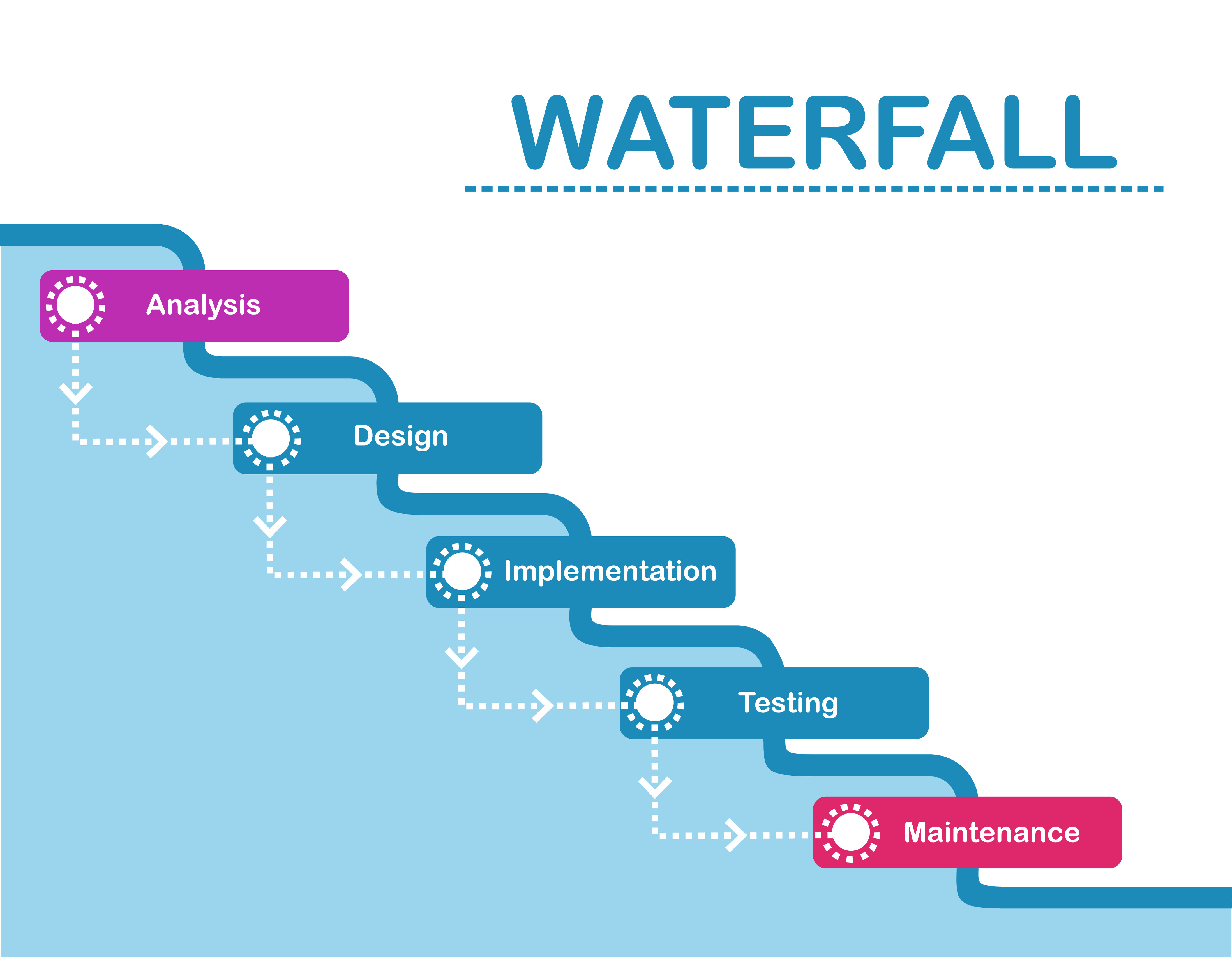
Waterfall methodology is a linear, sequential project management approach where a project flows steadily downward through distinct, predetermined phases. Each phase must be 100% complete before the next one can begin, and teams cannot easily go back to a previous phase without restarting the process.
Unlike Agile's flexible and iterative nature, Waterfall relies heavily on extensive upfront planning, strict documentation, and a fixed timeline.
The 6 Classic Phases of Waterfall
A traditional Waterfall project moves strictly through these consecutive stages: [11]
- Requirements: Gathering and documenting every detail, feature, and constraint of the project at the very beginning.
- System Design: Architects plan the technical solution, select programming languages, or create blueprints based on the fixed requirements.
- Implementation (Development): The actual build phase where team members code the software or construct the physical product.
- Integration and Testing: The completed product is put together and rigorously tested to find and fix defects.
- Deployment: The finalized, fully completed product is officially released to the market, client, or end-users.
- Maintenance: Ongoing support, patching bugs, and minor updates after the product is live.
Key Characteristics of Waterfall
- Sequential Flow: Progress is measured as it passes from one gated phase to the next.
- Heavy Documentation: Every step, requirement, and design choice is meticulously recorded before production begins.
- Low Flexibility: Changing a requirement mid-project requires a formal, often costly change management process.
- Delayed Value: Users do not see or touch a working version of the product until the entire project is completed.
Pros and Cons of the Waterfall Model
The Benefits:
- Clear Expectations: Costs, timelines, and final deliverables are clearly defined right from the start.
- Easy Tracking: Milestones are highly visible and straightforward to track because deadlines are fixed.
- Disciplined Structure: Clean separation of phases makes it easy to manage handoffs between different teams (e.g., designers to developers).
The Drawbacks:
- Rigid to Change: If market needs or client goals change halfway through, adapting is extremely difficult.
- Late Testing: Finding critical architectural flaws during the testing phase near the end of the project is highly expensive to fix.
- High Risk: If the initial requirements were flawed, the team risks spending months building the wrong product.
When to Use Waterfall Over Agile
While modern software development heavily favors Agile, Waterfall remains the industry standard for projects with:
- Fixed, unchangeable budgets and deadlines.
- Strict regulatory and compliance requirements (e.g., medical devices, aerospace engineering).
- Physical dependencies where iteration is impossible (e.g., building a bridge or a skyscraper).
- Well-understood technologies where the team has built the exact same product many times before.